

Dining Room Wall Art Ideas: How to Create an Elegant Dining Space
The dining room is more than a place to share meals. It is where family conversations unfold, guests gather, and everyday moments become memories. The right dining room wall art can give this gathering place a thoughtful, finished look while reflecting your personal style.
Whether you are decorating a formal dining room or a compact dining area, these ideas will help you choose the right artwork, size, colors, and placement. From textured abstract paintings to warm earth tones, discover how hand-painted canvas art can make your dining space feel inviting and refined.
1. Start with the Feeling You Want at the Table
Before choosing a painting, consider the character of your dining area. Do you want a soft, welcoming room for family dinners, a modern setting for entertaining, or a warm, nature-inspired interior? Artwork should complement the furniture, wall color, and materials already in the room.
For a light dining room with oak furniture, cream upholstery, and neutral walls, sage green or beige artwork can bring subtle color. For a room with walnut furniture, dark accents, or a rich wood dining table, terracotta, brown, and muted gold can create a cohesive look.
2. Choose Abstract Wall Art for a Modern Dining Room
Abstract dining room wall art works especially well when you want visual interest without introducing a literal subject. Look for layered brushwork, organic shapes, and carefully balanced colors that relate to the dining chairs, table, or nearby cabinetry.
A large horizontal abstract painting can sit above a buffet or sideboard, while a vertical canvas may suit a narrower wall beside a doorway. Hand-painted texture adds depth that can be appreciated from different positions around the dining table.

Featured artwork: Green Abstract Art #CA0751. This soft green abstract painting offers a gentle color accent for contemporary dining rooms.
3. Bring Natural Warmth with Botanical Paintings
Tree-inspired artwork is a natural choice for dining rooms because it pairs easily with wood, stone, woven seating, and warm neutral fabrics. Organic forms and soft earth tones can make a dining area feel welcoming without overwhelming the room.
If your dining room already has patterned chairs or a statement pendant, choose artwork with a restrained design. If the room is simple, a richly textured canvas can become the focal point.

Featured artwork: Leaf Wall Art #CA0721. Its botanical leaf design complements wooden dining tables and nature-inspired interiors.
4. Decide Between One Large Painting and a Set
Both single-panel paintings and multi-panel sets can work in a dining room. The choice depends on the wall and furniture proportions.
- One large horizontal canvas: Ideal above a long sideboard or along a dining wall, especially when you want a clean focal point.
- A two-piece set: Useful for wide walls and symmetrical furniture arrangements. Leave consistent spacing between the panels.
- One vertical painting: A good choice for narrow dining areas, walls between windows, or the end of a rectangular room.
When choosing a set, measure the combined width of all panels and the spaces between them, rather than judging each canvas separately.
5. Find the Right Dining Room Wall Art Size
Artwork usually looks more intentional when its width relates to the furniture beneath it. As a practical starting point, a painting above a sideboard can measure roughly two-thirds to three-quarters of the sideboard's width. This is a design guideline rather than a fixed rule.
For example, if your sideboard is 72 inches wide, artwork around 48–54 inches wide may be worth considering. In an open dining room without a sideboard, use the table, wall width, and nearby doorways to judge the proportions.
Common formats to explore include 24 × 36 inches, 30 × 40 inches, 36 × 48 inches, and 30 × 60 inches. The ideal choice depends on the available wall and whether the painting is horizontal or vertical. Ymipainting also offers custom sizing for many hand-painted artworks.
6. Hang Artwork at a Comfortable Viewing Height
Dining room artwork should feel connected to the furniture and easy to enjoy while seated or standing. A useful starting point is to place the artwork's center around eye level, then adjust for ceiling height and the furniture below it.
Above a sideboard, allow enough separation for decorative objects and for the painting to feel visually distinct. Before hanging, use painter's tape or paper cutouts to preview the size and position on the wall.
7. Use Textured Paintings to Add Depth
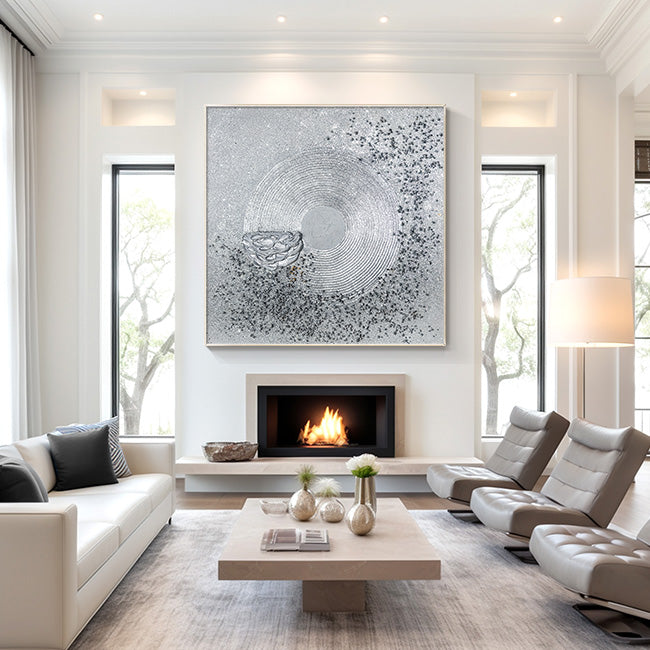
Texture is particularly appealing in dining rooms with smooth walls, glass tabletops, or simple furniture. Raised paint, palette-knife marks, and sculptural surfaces provide detail without requiring a complicated color scheme.
A textured abstract painting with neutral tones and gold details can pair naturally with a wooden dining table and upholstered chairs. If you prefer a quieter appearance, select a canvas with a limited range of colors and let the surface details provide interest.

Featured artwork: Gold Leaf Wall Art #CA0746. Neutral colors and gold details provide a refined finishing touch to dining room walls.
8. Coordinate Artwork with Your Dining Room Colors
You do not need to match every color exactly. Instead, repeat one or two tones from the artwork elsewhere in the room—for example, a muted green in chair upholstery, warm brown in the dining table, or soft gold in small accessories.
For an easy starting point, consider these combinations:
- Beige and ivory: Suitable for minimalist, Scandinavian, and Japandi dining rooms.
- Sage green and muted gold: Works with light oak, cream walls, and modern furniture.
- Terracotta and sand: Complements walnut, natural wood, and warm neutral interiors.
- Navy blue and off-white: Can suit contemporary dining rooms with dark furniture or blue accents.
More Dining Room Wall Art Styles to Explore
Beyond abstract, tree-inspired, and gold-textured paintings, different subjects can give your dining room its own personality. The following artworks are shown in dining room settings so you can compare how each style works alongside furniture.
Koi Fish Art for a Symbolic Dining Room Accent
Koi fish paintings offer a distinctive alternative to abstract wall art. The fish are often associated with prosperity, perseverance, and togetherness, making this subject meaningful for a room where family and friends gather. A gray-toned koi painting can work well with modern furniture while introducing an expressive nature-inspired subject.

Floral Wall Art for Colorful Dining Rooms
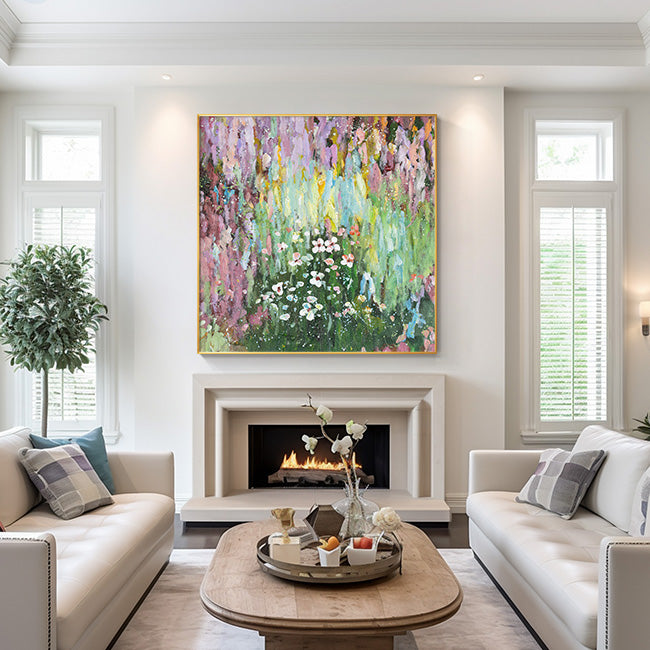
Floral artwork brings a welcoming, garden-inspired character to the dining area. A blue and red wildflower painting is a good option when you want more color than neutral abstracts provide. Repeat a small amount of its color in table linens or accessories for a cohesive result.

Seascape Paintings for Soft Coastal Dining Decor
A pastel seascape introduces gentle pink and ocean-inspired tones without requiring nautical accessories. Choose a horizontal ocean painting for a long dining wall, or pair it with pale wood and cream upholstery for a subtle coastal influence.

Geometric Art for a Structured Modern Look
Geometric wall art can bring order and repetition to a dining room with clean-lined furniture. A round geometric diptych works particularly well with rectangular dining tables and contemporary chairs, offering a different visual character from landscape or floral paintings.

Landscape Art for a Nature-Inspired Dining Room
A pastel landscape painting can make a dining room feel open and welcoming. Soft hills, subtle color, and natural scenery pair well with light wood dining furniture and neutral walls, offering an alternative to abstract, floral, and geometric designs.

9. Consider Framing and Customization
The presentation of your artwork matters as much as the subject. A wood-toned frame can connect the painting to a natural dining table, while black or gold framing may suit a more contemporary room. A gallery-wrapped canvas offers a simpler edge without an additional decorative frame.
Because dining rooms vary greatly in shape and wall dimensions, custom artwork can be especially useful. You may be able to request a different canvas size or color adjustments so the painting relates more closely to your dining furniture.
10. Keep the Final Arrangement Simple
After hanging the artwork, allow it room to stand out. A vase, a low bowl, or a few carefully chosen objects on the sideboard are often enough. Avoid crowding the wall with unrelated decorations if the painting is intended to be the focal point.
The goal is not to fill every empty surface. It is to create a dining room where the artwork, furniture, and materials feel connected.
Frequently Asked Questions About Dining Room Wall Art
What type of wall art is good for a dining room?
Abstract paintings, textured canvas art, landscapes, and botanical artwork are popular choices. The right option depends on your dining room's furniture, colors, and overall style.
Should dining room wall art be horizontal or vertical?
Horizontal artwork often suits wide walls and sideboards. Vertical paintings can work better on narrow walls or between architectural features.
How big should artwork be above a dining room sideboard?
As a starting point, consider art that is about two-thirds to three-quarters as wide as the sideboard. Check the actual wall measurements before choosing.
Can I use textured abstract art in a small dining room?
Yes. A textured painting with a limited color range can add detail to a compact dining room without making it feel visually crowded.
Can dining room artwork be customized?
Many hand-painted artworks from Ymipainting can be made in custom sizes, and selected designs can be adjusted in color. Check the product details or contact the team about your dining room measurements.
Find Hand-Painted Dining Room Wall Art at Ymipainting
Thoughtfully selected artwork can make a dining room feel welcoming, personal, and well considered. Explore Ymipainting's hand-painted wall art, including textured abstract designs and custom-size canvas paintings, to find a piece that complements your dining area.


