
Entryway Wall Art Ideas: Make a Beautiful First Impression
The entryway is more than a passage between the front door and the rest of the home. It is the first interior space your guests experience—and often the first place that communicates your personal style.
That makes the entryway an ideal location for art.
Whether your home leans modern, minimalist, traditional, Japandi, or eclectic, the right piece of wall art can turn an otherwise functional entrance into a memorable design moment.
As The Metropolitan Museum of Art notes, scale is fundamental to the making and reception of art, influencing the relationship between an artwork and the viewer. This is particularly relevant in an entryway, where the artwork needs to work with doors, consoles, mirrors, lighting, and the proportions of the surrounding architecture.
Here are some entryway wall art ideas to help you create a beautiful first impression.

1. Make One Artwork the Focal Point
One of the simplest ways to create a sophisticated entryway is to let one artwork take center stage.
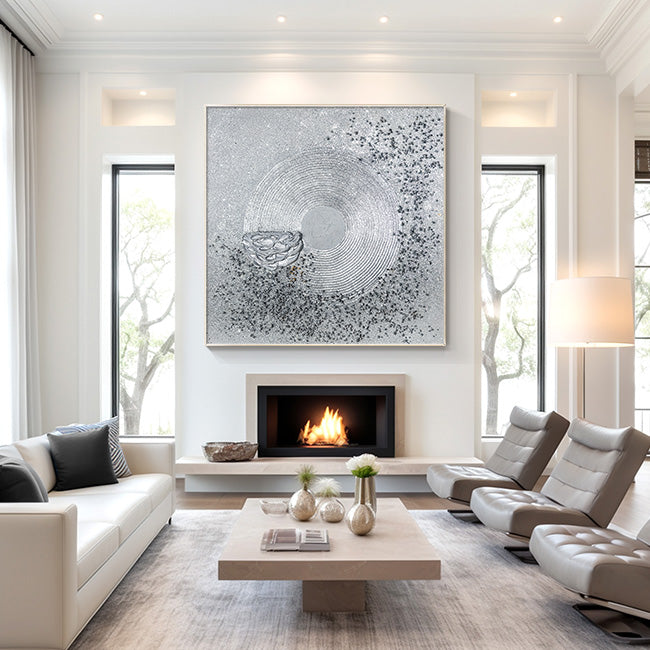
A large abstract painting above a console table can immediately establish the mood of the space. Instead of filling the wall with many small decorations, a single substantial piece gives the eye somewhere to land.
This approach also aligns with the principles used in professional exhibition design. The Smithsonian American Art Museum describes how exhibition designers consider wall configuration, object placement, color, and scale together when creating an environment for artwork.
For a residential entryway, this might mean:
· A large neutral abstract painting above a console
· A textured canvas as the main visual feature
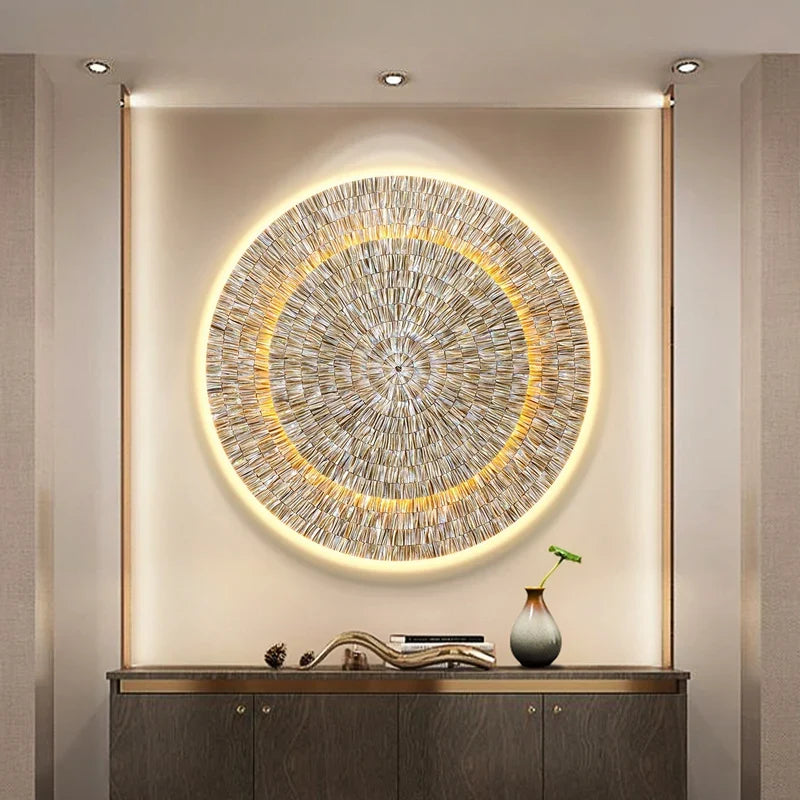
· A sculptural fiber artwork for a more tactile look
· A minimalist monochrome piece for a contemporary home
The key is proportion. A small artwork can disappear on a large wall, while an oversized piece can overwhelm a narrow entrance.

2. Choose Artwork That Reflects the Mood of Your Home
Your entryway can act as a visual introduction to the rest of your interior.
If your home uses warm wood, beige, cream, and natural materials, consider artwork with soft earth tones, sand, taupe, or warm white.
For a contemporary home, black-and-white abstract art or artwork with strong geometric forms can create a more architectural feeling.
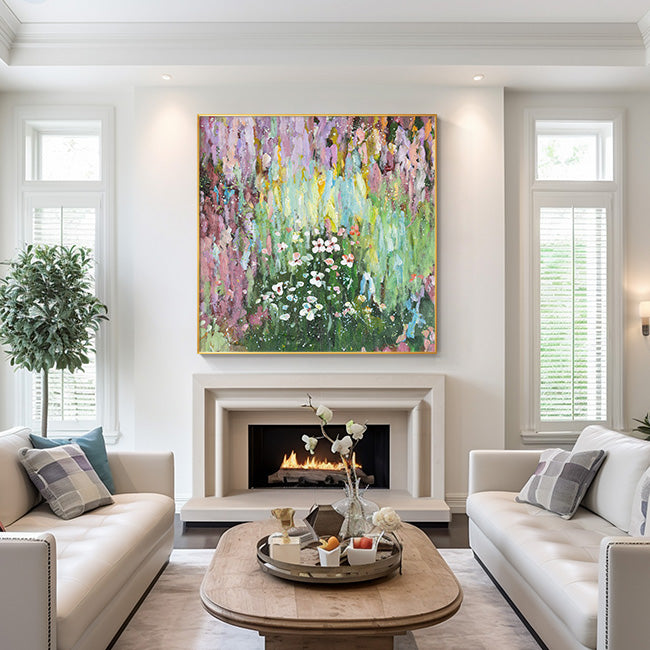
If you want the entrance to feel energetic, color can become the focal point.
The Smithsonian Institution emphasizes that color influences how we experience the visual world and can help establish the mood of a space or artwork.
You don't necessarily need a bright painting to create impact. Sometimes a subtle contrast—such as warm beige artwork against a cooler white wall—is enough.

3. Consider the Relationship Between Artwork and the Front Door
The front door is naturally one of the strongest focal points in an entryway. Interior design guidance from Houzz similarly identifies the door as a dominant visual draw in many entry spaces.
This means your artwork should complement rather than compete with the entrance.
For example:
Dark door + light wall:
Try neutral or warm artwork to soften the contrast.
White or light-colored door:
A darker abstract painting can provide depth.
Colorful door:
Consider artwork that echoes one of the door's colors without exactly matching it.
Natural wood door:
Textured artwork and natural wood frames can create a cohesive organic look.
The goal is visual connection rather than perfect color matching.

4. Use a Large Canvas for a Dramatic Entryway
If you have a generous foyer or a long wall, a large-format canvas can make a much stronger statement than several small pieces.
Large-scale artwork is especially effective when the surrounding furniture is relatively simple.
For example:
Large wall + simple console + one oversized painting = strong focal point
The Metropolitan Museum of Art explains that scale directly affects the relationship between the viewer and the artwork.
This is why large artwork can feel particularly appropriate in an entryway with high ceilings or generous wall space.
However, always consider the walking path. The artwork should create visual impact without making the entrance feel crowded.

5. Add Texture for a More Sophisticated Look
Not every entryway needs a traditional painted canvas.
Textured artwork can introduce another layer of visual interest, especially in neutral interiors.
Consider:
· Textured plaster artwork
· Handmade fiber art
· Yarn wall decor
· Layered canvas
· Sculptural wall art
· Mixed-media artwork
Texture becomes especially effective when the rest of the entryway is restrained.
A simple cream console, natural wood frame, soft lighting, and textured artwork can create a warm, gallery-inspired atmosphere without making the space feel busy.

6. Don't Ignore the Frame
The frame is part of the composition—not merely something added after the artwork is finished.
A natural oak or pine frame can reinforce an organic interior. A slim black frame can make colorful artwork feel more contemporary. A floating frame can create additional depth around a canvas.
The Smithsonian's exhibition work demonstrates how architectural elements, wall configuration, scale, and artwork presentation are considered together rather than independently.
For entryways, consider the relationship between the frame and:
· Console table
· Door hardware
· Mirror
· Flooring
· Lighting fixtures
· Other wood or metal finishes
You don't have to make every finish identical. Repeating one material or tone is often enough to visually connect the elements.

7. Think About Lighting Before Choosing the Artwork
Beautiful artwork can lose much of its impact if the lighting is poor.
Avoid placing artwork where direct glare makes it difficult to see the surface. Instead, consider:
· Wall-mounted picture lights
· Adjustable recessed lighting
· Directional ceiling lights
· Soft ambient lighting
The Smithsonian American Art Museum notes that gallery lighting is designed to make artworks visually stand out while maintaining an appropriate relationship with the wall and surrounding space.
For textured paintings, directional light can be particularly interesting because shadows can emphasize the relief and surface variation.
8. Create a Gallery Wall—But Keep It Organized
A gallery wall can work beautifully in an entryway, especially along a staircase or a long corridor.
Instead of randomly placing frames, establish a visual structure.
You could use:
· Three similarly sized artworks
· A symmetrical arrangement
· A grid layout
· A combination of paintings and photographs
· A collection with a consistent frame finish
The Smithsonian's exhibition designers regularly use grouping, scale, wall configuration, and spatial relationships to create visual coherence.
For a home, the same principle applies: a collection should feel intentional rather than accidental.

9. Keep the Entryway Visually Calm
One common mistake is trying to decorate every available surface.
If you already have a mirror, console, vase, lamp, sculpture, rug, and large artwork, adding more objects may actually reduce the impact of each individual element.
A better approach is to choose a few strong elements.
For example:
Option A — Minimalist
Large abstract painting + slim console + small vase
Option B — Organic
Textured artwork + natural wood frame + wood console + greenery
Option C — Contemporary
Large monochrome artwork + black frame + sculptural lighting
Option D — Warm & Elegant
Neutral textured painting + light oak frame + warm lighting
The goal is not to fill the entryway. It is to create a clear visual experience.
10. Use Your Entryway to Tell a Story
Perhaps the most important consideration is that your entryway should feel like your home.
A painting can introduce the colors, textures, and artistic personality that visitors will encounter throughout the rest of the house.
The Metropolitan Museum has emphasized how art and architectural environments can work together to shape how visitors experience a space.
Your entryway can do the same thing on a much smaller scale.
It can be:
· Calm and minimal
· Warm and welcoming
· Bold and artistic
· Natural and organic
· Sophisticated and gallery-inspired
There is no single correct formula.

Final Thoughts
A beautiful entryway doesn't require dozens of decorative objects. Often, one well-chosen piece of wall art can establish the entire mood of the space.
Start with the proportions of your wall, consider the relationship between the artwork and your front door, choose colors that complement the existing interior, and give careful thought to the frame and lighting.
Most importantly, choose artwork that feels meaningful to you.
After all, the entryway is the first impression of your home—but it should also be the first reminder of what makes your home yours.