

Feng Shui Wall Art: How to Choose Paintings for Your Home
Wall art does more than decorate an empty wall. Its colors, subjects, textures and placement can shape how a room feels. In traditional Chinese Feng Shui, paintings are often selected according to the room where they will hang and the symbolic qualities of their subjects. This guide introduces the five elements, practical placement ideas and common painting themes to help you choose artwork for your home.
What Is Feng Shui?
Feng Shui is a traditional Chinese practice concerned with the relationship between people and their surroundings. In interior decoration, it offers a way to think about balance, the flow of a room and the symbolism of objects. Wall art can contribute through its subject, color, scale and position. The meanings discussed here reflect traditional cultural interpretations and design inspiration, not scientifically proven effects or guarantees of good fortune.

Understanding the Five Elements in Feng Shui
The five elements, known as Wu Xing, are Wood, Fire, Earth, Metal and Water. Each is associated with particular colors, forms and natural imagery. Wood is commonly linked with green and growth; Fire with red, orange and lively warmth; Earth with beige, brown and stability; Metal with white, gray, silver and gold; and Water with blue, black and flowing forms. These associations provide a starting point for choosing art, but a painting can express more than one element through its colors and subject.

Where to Hang Feng Shui Wall Art
Before choosing a painting, consider the purpose and atmosphere of each room. A subject that feels welcoming in a shared living area may not be the same one you would choose for a restful bedroom or a focused home office. Scale, viewing distance, surrounding furniture and personal preference are just as important as traditional symbolism.
Living Room
The living room is a shared gathering space, so choose artwork that feels welcoming and works with the room’s main focal point. Landscapes, botanical subjects and balanced abstract paintings can all be suitable. Above a sofa, a horizontal work or coordinated pair can help visually connect the wall and furniture. As a starting point, artwork can be around two-thirds to three-quarters of the sofa width, adjusted to the wall and layout.

Set of 2 Gold Leaf Art #YMA079
Bedroom
For a bedroom, many people prefer gentle imagery and colors that create a restful visual atmosphere. Soft landscapes, understated botanical art and abstract floral paintings in muted shades can be considered. Avoid choosing a piece solely for its traditional meaning if its colors or subject feel too busy for the room. Hang it securely and leave a comfortable visual balance around the bed.

Office
For a home office, mountain artwork can represent support, steadiness and a grounded working environment in Feng Shui-inspired decorating. The layered beige and brown mountain forms in this textured painting bring a natural, structured focal point to the room without relying on overly bright colors. Consider placing it where it can be comfortably viewed from your desk, while keeping the wall balanced and the artwork securely mounted.

Entryway
The entryway is the transition into the home, so artwork here can establish a welcoming first impression. A simple landscape, botanical subject or warm abstract painting can work well. Choose a size that suits the width of the wall, keep the passage clear and make sure the artwork is securely mounted. No single subject or direction is suitable for every home; consider the layout and the feeling you want to create.

Common Feng Shui Painting Subjects by the Five Elements
After considering where a painting will hang, the next step is to choose a subject. In Feng Shui-inspired decorating, common painting themes can be understood through the five elements. The element is suggested by a combination of subject, color, shape and material rather than by the subject alone. The examples below show how traditional symbolism can be interpreted through contemporary hand-painted wall art.
Wood Element: Trees, Leaves and Botanical Flowers
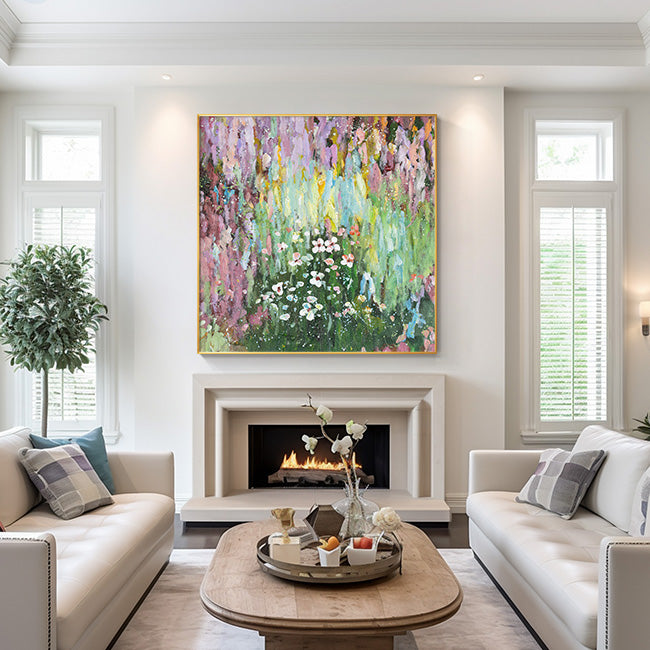
Wood is associated with growth, vitality and renewal. Green tones, upright forms, trees, branches, leaves and botanical subjects are often used to express this element. Abstract floral paintings can also fit when their colors and organic shapes suggest nature. Consider green tree art, textured leaf paintings or floral works with fresh botanical colors.

Fire Element: Warm-Colored Flowers and Expressive Abstract Art
Fire is associated with warmth, brightness and activity. Red, orange, coral, pink and other warm hues can suggest this element. Floral paintings, expressive brushwork and artworks with lively warm accents are contemporary ways to introduce it. If you prefer a softer look, choose a floral piece where warm shades are balanced with neutral or green areas.


Earth Element: Mountains, Landscapes and Natural Neutrals
Earth is traditionally connected with stability, nourishment and grounding. Beige, sand, ochre, taupe and brown tones, together with mountains, hills and natural landscapes, can express this element. Textured Wabi-Sabi art and calm landscape paintings are suitable modern interpretations, especially when you want a grounded, understated look.

Beige Abstract Wall Art #YMA027
Metal Element: Gold, Silver, White and Refined Abstract Art
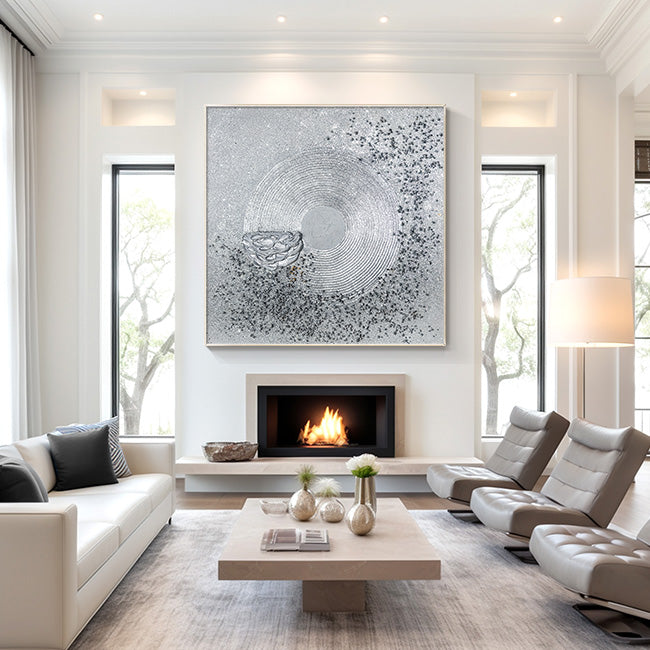
Metal is associated with clarity, refinement and structure. White, gray, silver and gold are its familiar color references. Metallic leaf details, gold accents, silver textures and balanced geometric or abstract designs can bring this element into a room. Look for artwork where metallic details complement rather than overwhelm the overall design.


Water Element: Koi Fish, Rivers, Lakes and Blue Abstract Art
Water is associated with flow, adaptability and abundance in many Feng Shui interpretations. Blue and black tones, curved lines, rivers, lakes, seascapes and fish imagery are common visual references. Koi fish paintings are especially popular in East Asian decorative art, where koi are associated with perseverance and good fortune. Nine-koi designs are often chosen for the favorable cultural associations of the number nine.


Choosing Painting Size, Orientation and Placement
Choose artwork according to the dimensions of the wall and nearby furniture. Horizontal paintings often suit sofas and dining room walls; vertical works can fit narrow entryways; square paintings may work in compact spaces. A common gallery hanging reference is to position artwork around 57–60 inches from floor to center, but placement above furniture should be adjusted to the furniture and wall proportions. Always use secure hanging hardware, especially above a bed.
Frequently Asked Questions
What paintings are considered good for Feng Shui?
Mountain landscapes, koi fish, water scenes, trees and flowers are common subjects. Their meanings vary by tradition, color and context.
Which Feng Shui painting is suitable for a living room?
Landscapes, koi fish, botanical art and balanced abstract paintings are popular choices. Consider the room’s layout, artwork size and the atmosphere you want.
What colors are associated with the five Feng Shui elements?
Green is commonly associated with Wood; red and orange with Fire; beige and brown with Earth; white, gray, silver and gold with Metal; and blue and black with Water.
Can abstract paintings be used for Feng Shui-inspired decor?
Yes. Abstract artwork can reference the five elements through color, form, texture and material, even when it does not depict a traditional subject.
Where should Feng Shui wall art be placed?
Choose a position that suits the room’s function, viewing distance and furniture arrangement. Make sure the artwork is securely mounted and comfortable to look at.
Explore Hand-Painted Wall Art at YmiPainting
Traditional symbolism can offer inspiration, but the best choice is artwork that feels right in your home. Explore hand-painted koi fish art, landscapes, botanical paintings, floral designs and textured abstract wall art at YmiPainting. Choose by subject, color, style and size to find a piece that reflects your personal taste.


