
2026 Transitional Wall Art: 3 Styles for Elegant Modern Homes
Quick Answer: What Wall Art Works Best for Transitional Interiors?
The best transitional wall art combines the warmth and elegance of traditional interiors with the clean lines and simplicity of modern design. Three styles work particularly well:
-
Neutral wall art: ivory, cream, beige, taupe and soft gray create a calm, versatile foundation.
-
Traditional meets modern: abstract landscapes, organic forms and refined compositions balance classic furnishings with contemporary design.
-
Large-scale statement art: oversized canvas paintings create a focal point and visually connect traditional furniture with modern accents.
Transitional design is not simply a mixture of old and new. It is a deliberate balance between classic proportions, contemporary simplicity, comfortable materials and restrained decoration. Architectural Digest's guide to transitional design highlights neutral palettes, clean lines, traditional forms and modern elements as defining characteristics.
Source: https://www.architecturaldigest.com/story/transitional-design-101
For homeowners searching for transitional wall art for living rooms, bedrooms and dining rooms, the most effective approach is to select artwork that complements the architecture and furniture instead of competing with them.

What Is Transitional Interior Design?
Transitional interior design combines traditional elegance with contemporary simplicity to create spaces that feel timeless, comfortable and refined.
Traditional interiors often feature classic furniture silhouettes, decorative details and established design motifs. Contemporary interiors tend to favor cleaner lines, simpler forms and less ornamentation. Transitional design brings these qualities together without allowing either style to dominate.
Architectural Digest describes transitional interiors as a balance between traditional and modern aesthetics, often incorporating neutral colors, understated details, layered textures and a combination of straight and curved forms.
Source: https://www.architecturaldigest.com/story/transitional-design-101
This balance also influences the choice of artwork.
Rather than choosing a painting that looks entirely traditional or aggressively contemporary, consider art that combines recognizable forms with a modern composition, or classic landscape influences with a restrained palette.
The result is a room that feels polished without being formal, modern without being cold, and timeless without looking dated.

1. Neutral Wall Art: The Foundation of Transitional Style
Why Neutral Colors Work
Neutral wall art is one of the most versatile choices for transitional interiors. Ivory, cream, beige, taupe and soft gray can connect traditional furniture, modern lighting, natural wood and contemporary textiles.
These colors also make it easier to introduce different materials without creating unnecessary visual contrast.
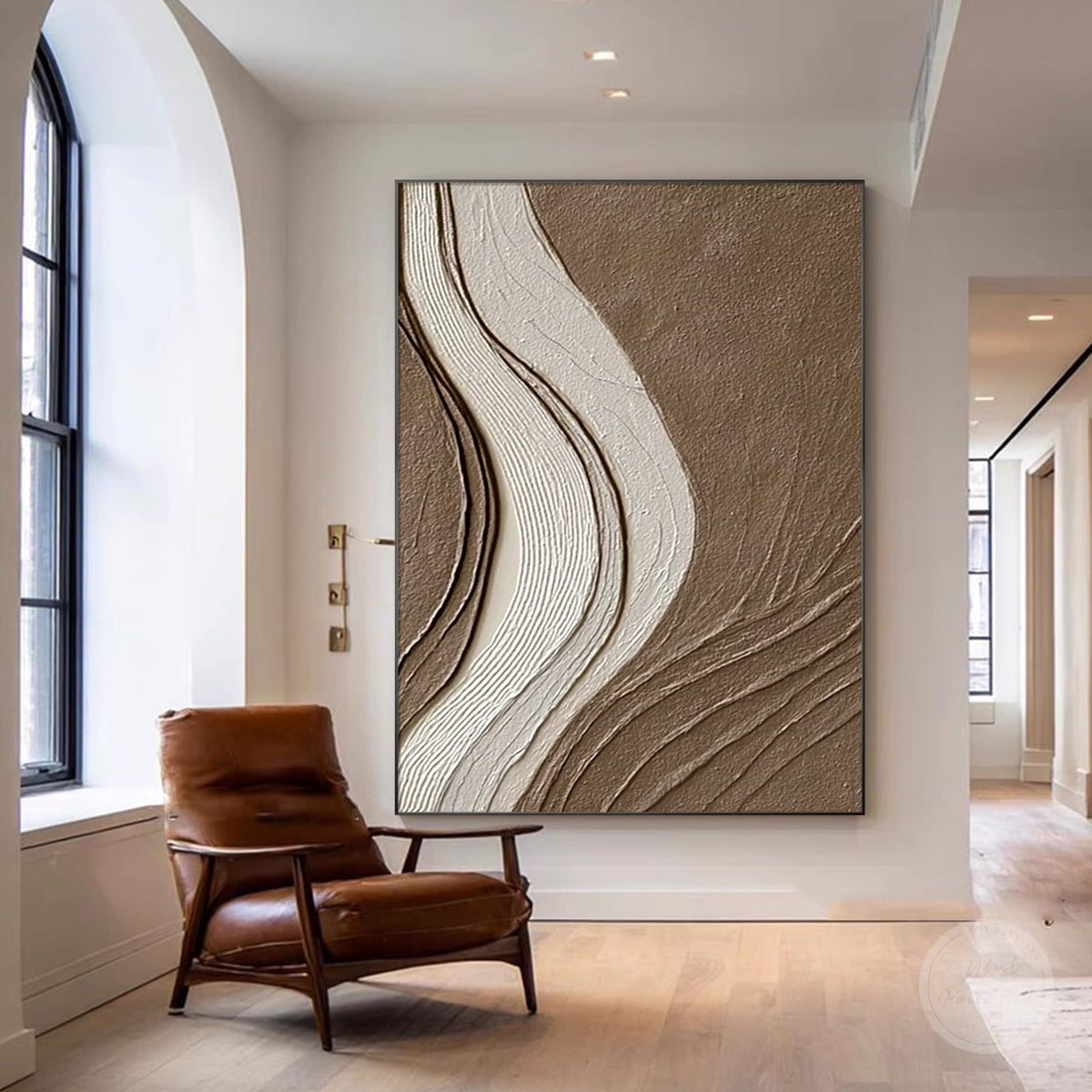
For example, a cream abstract painting can complement a traditional upholstered sofa, while a taupe textured canvas can connect a modern coffee table with a classic wooden sideboard.
Architectural Digest identifies tone-on-tone neutrals, textured upholstery, metallic accents and organic textures as useful elements in transitional design.
Source: https://www.architecturaldigest.com/story/transitional-design-101
Neutral Abstract Canvas

This neutral abstract painting features beige, gray and taupe tones, offering a restrained contemporary look that can complement traditional furniture and modern accessories. Its neutral palette makes it a flexible choice for living rooms, bedrooms and home offices.
Best for: neutral living rooms, elegant bedrooms and contemporary-classic interiors.
Modern Textured Neutral Art

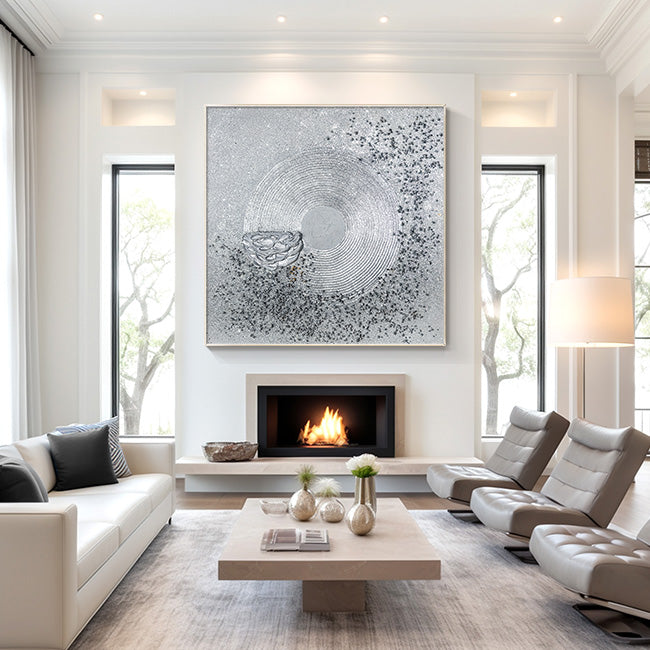
This artwork uses a soft neutral palette with layered texture and an understated abstract composition. It works well when a room needs visual depth without introducing strong colors or elaborate patterns.
Best for: cream interiors, transitional bedrooms and living rooms with mixed wood finishes.
How to Style Neutral Wall Art
For a balanced transitional interior, combine:
-
Ivory or beige artwork
-
A classic upholstered sofa
-
Natural wood furniture
-
Contemporary lighting
-
Linen or textured fabrics
-
A restrained metallic accent
The key is to create visual continuity. The artwork should connect the colors and materials already present in the room.
2. Traditional Meets Modern: Artwork That Bridges Two Styles
What Does Traditional-Modern Wall Art Look Like?
Traditional-modern wall art combines familiar subjects or classic visual balance with contemporary color, texture or abstraction.
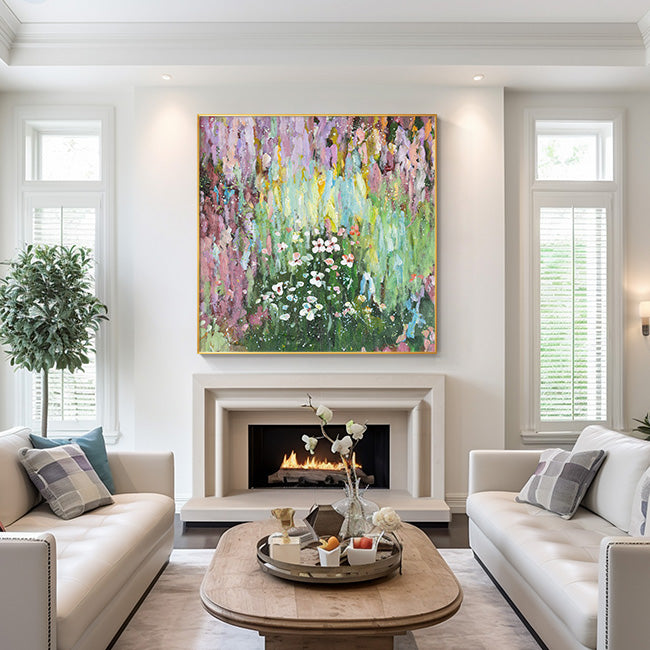
This can include abstract landscapes, softened organic forms, simplified nature-inspired compositions and paintings that reinterpret traditional subjects through a modern artistic language.
The goal is not to reproduce a historical interior. It is to preserve the comfort and familiarity of traditional design while introducing a fresher visual perspective.
For example, an abstract landscape can feel classic because it references nature, yet contemporary because of its simplified shapes and restrained brushwork.
Neutral Abstract Landscape

This beige abstract landscape combines earthy colors with a simplified composition. It is a strong choice for transitional spaces because landscape-inspired imagery feels familiar while its modern presentation keeps the interior from looking overly traditional.
Best for: living rooms, bedrooms, dining rooms and interiors with warm wood finishes.
Textured Neutral Abstract Art

This beige abstract artwork combines geometric and organic visual elements with a soft neutral palette. It can complement classic furniture silhouettes while adding a contemporary note through its composition and surface texture.
Best for: transitional living rooms, hallways and spaces combining classic furniture with modern accessories.

How to Mix Traditional and Modern Artwork
Use the artwork to balance the room's strongest design elements.
-
With a traditional sofa, choose a contemporary abstract painting.
-
With modern furniture, consider a landscape-inspired composition.
-
With ornate architectural details, keep the artwork visually restrained.
-
With simple furniture, choose a painting with more texture or movement.
This approach creates a deliberate relationship between old and new rather than an unrelated collection of decorative styles.
3. Large-Scale Statement Art: Create a Focal Point
Why Large Wall Art Works in Transitional Homes
Large-scale wall art can anchor a transitional room and connect furniture from different design periods.
A large canvas above a sofa, bed or console establishes a clear visual center. This can be especially helpful in transitional interiors, where traditional and modern pieces need a unifying element.
The right scale depends on the wall, furniture and viewing distance. As a practical starting point, choose artwork approximately two-thirds to three-quarters of the width of the furniture beneath it, then adjust for the room's proportions and surrounding architecture.
For a long sofa, a horizontal or panoramic painting often creates a natural visual connection. Above a bed, a wide composition can reinforce the horizontal lines of the headboard. A large square canvas can work well on a broad wall with a compact furniture arrangement.
How to Choose the Right Size
Before purchasing large wall art, measure the wall and the furniture beneath it.
Consider these practical guidelines:
-
Above a sofa: artwork around two-thirds to three-quarters of the sofa width is a useful starting point.
-
Above a bed: align the artwork visually with the headboard and leave comfortable space above it.
-
Above a console: ensure the painting feels proportionate to the console rather than dominating the entire wall.
-
On a large empty wall: consider one substantial canvas or a coordinated pair instead of many small unrelated pieces.
These are design guidelines rather than fixed rules. Ceiling height, furniture shape, frame thickness and surrounding decor can change the ideal proportions.
4. How to Choose Transitional Wall Art by Room
Transitional Living Room
The living room is often the best place for a statement painting.
Choose neutral abstract art if the room already contains patterned upholstery or decorative furniture. If the furniture is simple, a textured abstract landscape can provide more visual interest.
Recommended styles:
-
Large neutral abstract canvas
-
Beige and taupe landscape
-
Textured contemporary artwork
Transitional Bedroom
A bedroom benefits from calm colors and a composition that feels balanced above the bed.
Choose ivory, cream, beige or soft gray, and avoid artwork that competes with patterned bedding or elaborate headboards.
Recommended styles:
-
Neutral textured abstract art
-
Soft landscape-inspired paintings
-
Wide horizontal canvases
Transitional Dining Room
The dining room can accommodate a slightly more expressive composition, especially above a sideboard or dining table.
A large neutral abstract painting can connect traditional dining furniture with modern lighting and contemporary accessories.
Recommended styles:
-
Panoramic abstract landscapes
-
Beige and brown artwork
-
Large-scale neutral paintings
Transitional Entryway
For an entryway, choose one painting that establishes the home's palette and design character.
A medium or large neutral artwork can complement a classic console while introducing a contemporary element. Keep nearby accessories restrained so the painting remains the focal point.
5. How to Make Transitional Art Feel Timeless
The strongest transitional interiors balance consistency with contrast.
Keep the Color Palette Connected
Choose artwork that repeats one or two colors already found in the room, such as beige upholstery, gray curtains, warm wood or cream walls.
Mix Classic and Contemporary Forms
Pair traditional furniture with simplified abstract art, or combine modern furniture with a landscape-inspired painting.
Use Texture Instead of Excessive Decoration
Layered surfaces, textured canvas, linen, wood and stone can create visual depth without requiring many decorative accessories.
Pay Attention to Scale
A painting should relate to the furniture and architecture around it. A well-proportioned artwork often creates a more polished result than adding multiple smaller pieces.
Avoid Making Everything Match
Transitional design is about balance, not identical furniture sets or perfectly matched colors. Small variations in wood tones, materials and artwork can make a room feel more natural and collected.
6. Why Hand-Painted Art Can Suit Transitional Interiors
Hand-painted artwork can introduce surface variation, visible brushwork and layered texture into a room that combines traditional materials with contemporary furnishings.
YmiPainting identifies relevant artworks as hand-painted and made to order, with customization options for size, color, orientation and framing on applicable product pages.
For example, the YMA0527 product page describes the artwork as 100% hand-painted and lists options for custom sizes, colors and frames.
Product source: https://ymipainting.com/products/abstract-art-yma0527
Customization can be helpful when an artwork needs to coordinate with a specific sofa width, wall color or combination of traditional and contemporary furnishings.
Final Guide: Which Transitional Wall Art Should You Choose?
Use this simple guide to select artwork for your home:
| Interior Need | Recommended Art Style | Suggested Artwork |
|---|---|---|
| Calm, versatile color palette | Neutral abstract art | YMA0527 |
| Soft texture and understated detail | Textured neutral art | YMA0524 |
| Classic subject with modern composition | Abstract landscape | YMP647 |
| Contemporary accent for classic furniture | Geometric-neutral abstract | YMP626 |
| Large wall above a sofa | Panoramic landscape | YMP644 |
| Spacious neutral living room | Beige abstract landscape | YMP652 |
| Large wall needing a centered composition | Square textured canvas | YMP638 |
| Wide wall needing a contemporary focal point | Neutral abstract art | YMP560 |
The best transitional wall art is not necessarily the most traditional or the most modern. It is the piece that connects the room's colors, materials, furniture and proportions.
Start with neutral tones, add a contemporary interpretation of a familiar subject, and use scale to establish a focal point.
This approach helps create an interior that feels elegant, comfortable and current without depending on short-lived trends.
Explore Transitional Wall Art at YmiPainting
Explore YmiPainting's collection of hand-painted abstract paintings, neutral landscapes and textured canvas art to find artwork that complements transitional living rooms, bedrooms, dining rooms and entryways.
Browse the collection: https://ymipainting.com/collections/all-art
Authoritative Sources and Further Reading
-
Architectural Digest — Transitional Design: Everything You Need to Know About This Traditional and Modern Style
Explains the blend of traditional and modern aesthetics, neutral palettes, clean lines and layered textures.
https://www.architecturaldigest.com/story/transitional-design-101 -
YmiPainting — All Art Collection
Browse current artwork categories, including abstract art, landscape art, textured artwork and multiple orientations.
https://ymipainting.com/collections/all-art