
Best Colors for Feng Shui Mountain Paintings: Create a Calm & Balanced Space
Mountain landscape paintings have become a timeless element in interior design. In more and more Western homes, they are not just wall décor, but a visual element that brings a sense of calm, balance, and connection to nature.
The value of a mountain painting goes beyond whether it “looks good.” What really matters is how it makes a space feel—whether it feels relaxing, whether there is a sense of flow, and whether the environment becomes more comfortable and natural.
In many ways, it is not just decoration, but a way of expressing the emotional atmosphere of a space.
Although mountain landscape art originates from Eastern philosophy, it aligns closely with modern interior design—especially in terms of color psychology and creating spatial harmony.
Across both feng shui and contemporary design, there is a shared understanding:
color is one of the most direct factors influencing how a space feels.

Mountains, Water, and the Idea of Balance
In traditional feng shui philosophy:
- Mountains symbolize stability and support
- Water represents movement and flow
This idea can be traced back to the classic Chinese text The Book of Burial (Zang Shu):
“Energy disperses with the wind and gathers where water is contained.”
In simpler terms, this reflects a key design principle:
👉 a well-balanced space needs both grounding and flow.
This is why mountain landscape paintings naturally feel calm, balanced, and harmonious.

The Importance of Choosing the Right Colors
When selecting a mountain painting, color is often more important than it first appears.
Different colors don’t just create visual variation—they directly influence the mood and atmosphere of a space.
Green Tones: Nature, Growth, and Balance
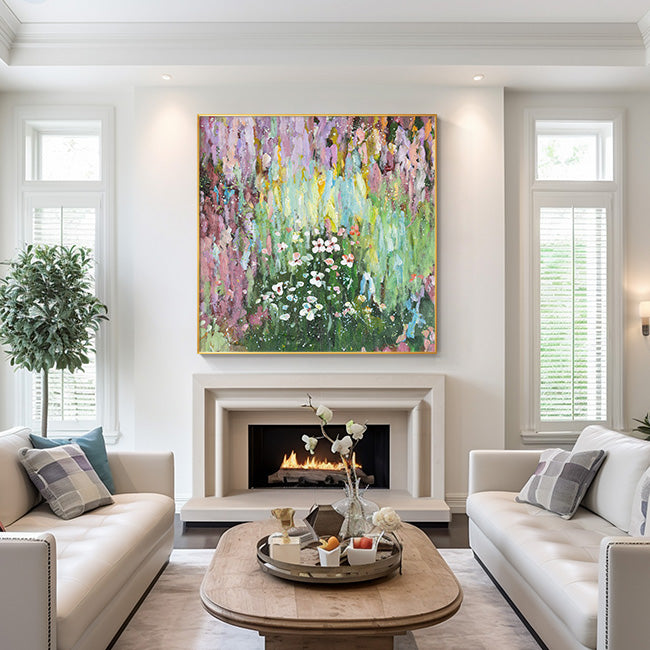
Green is one of the most common colors in mountain paintings.
In feng shui, it is associated with the Wood element, symbolizing growth and renewal.
In modern color psychology, green is linked to relaxation, balance, and restoration.
Because of this, green-toned mountain paintings tend to make a space feel more natural, comfortable, and visually soothing over time.

Blue Tones: Calmness, Space, and Depth
Blue is often used to represent sky, water, or distant landscapes.
In both feng shui symbolism and psychological research, blue is associated with calmness, stability, and relaxation.
Design studies also suggest that:
👉 cool tones can make a space feel larger and more open.

Earth Tones: Stability and Grounding
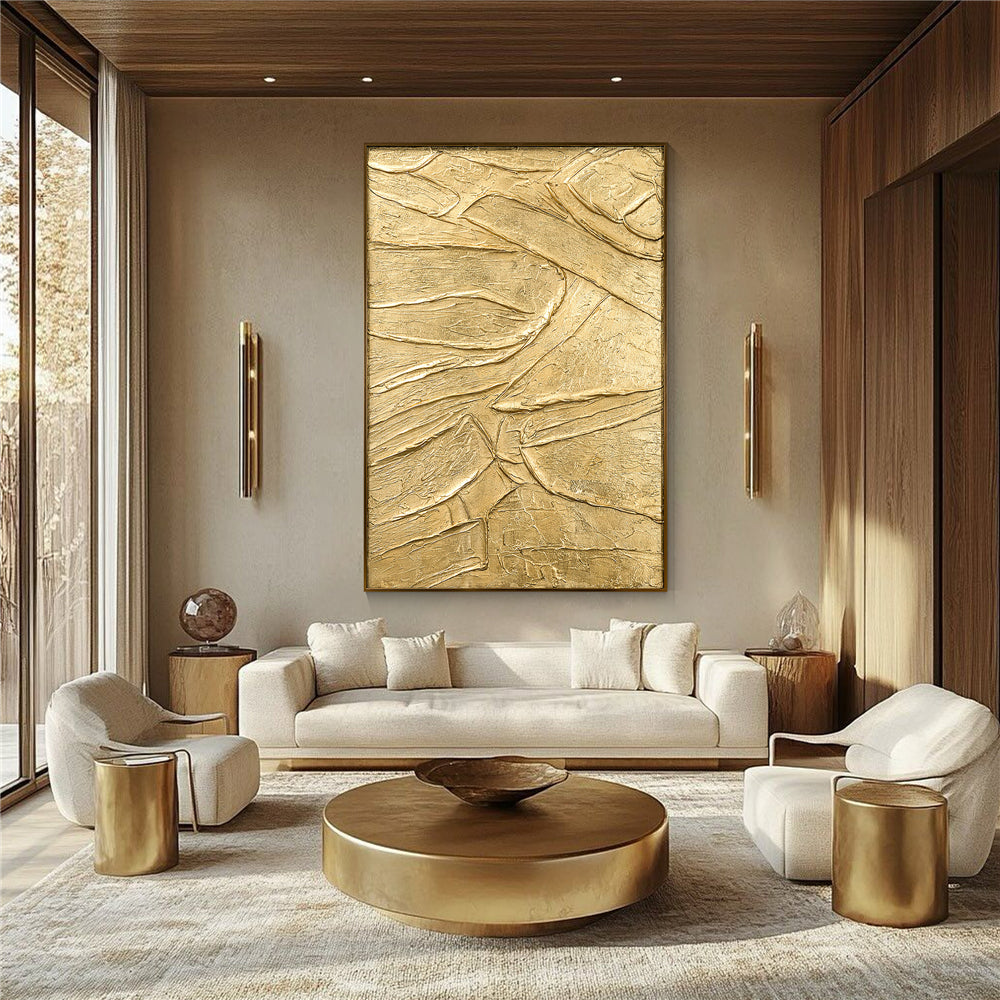
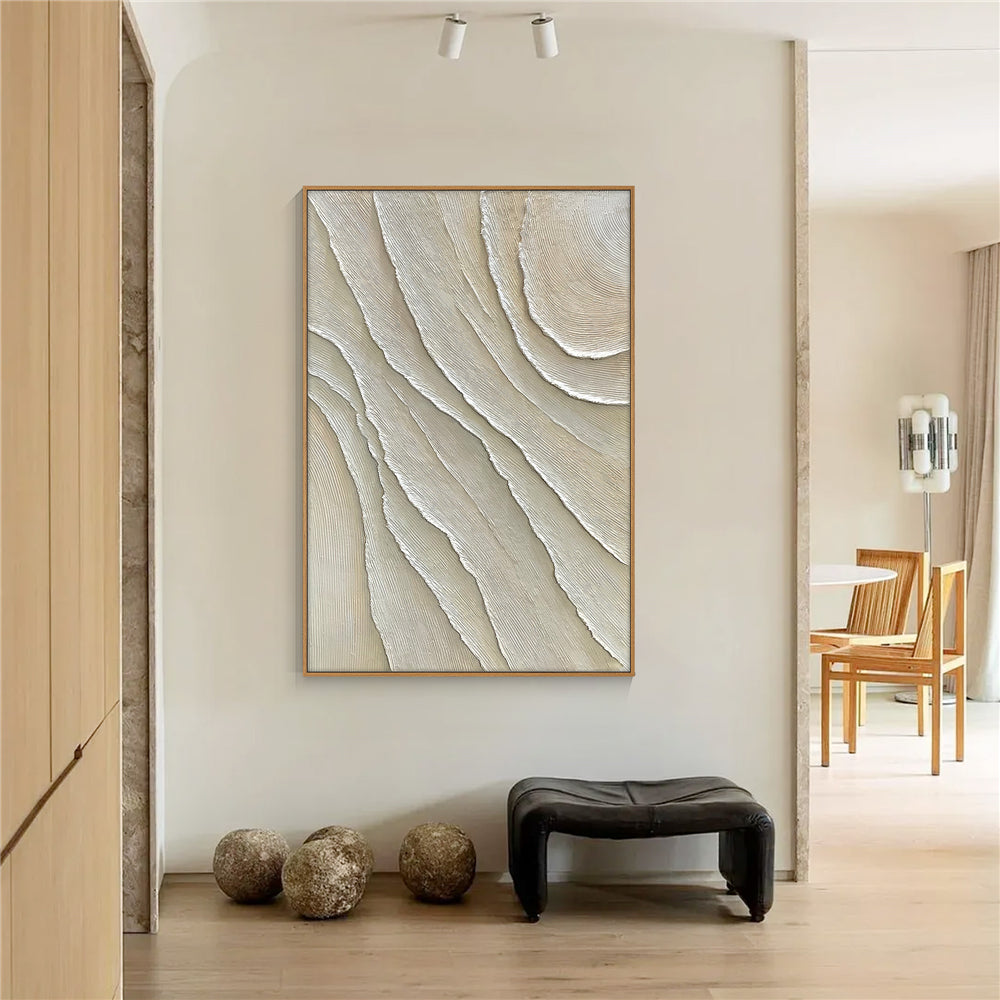
Beige, brown, and other natural earth tones correspond to the Earth element in feng shui.
They represent:
- stability
- support
- balance
From a design perspective, these tones create a stronger sense of security and help soften transitions within a space.
For this reason, earth tones are often considered foundational colors for a balanced interior.

Why Mountain Paintings Still Work in Modern Spaces
Even as design trends continue to evolve, mountain landscape art remains relevant.
The reason is simple—it meets deeper emotional and psychological needs in today’s living environments.
A Connection to Nature
Biophilic design theory suggests that humans have an innate attraction to natural elements.
Mountain paintings offer a simple way to bring that natural feeling indoors.
Visual Calm in a Fast-Paced World
Modern interiors can often feel visually overwhelming.
Mountain paintings provide a sense of “visual quiet,” helping reduce mental clutter and making it easier to relax.
Long-Term Aesthetic Value
In design forecasting, landscape art is often categorized as a
👉 “timeless aesthetic”
This means it is unlikely to go out of style and works well for long-term use.

Final Thoughts: Color as Emotional Architecture
Mountain landscape paintings are more than decorative objects—they help shape the emotional atmosphere of a space.
- Green brings a sense of life and renewal
- Blue creates calmness and openness
- Earth tones provide stability
- Ink tones introduce stillness
When these colors are balanced within a single artwork, they create not only visual beauty, but also a lasting emotional impact.
Ultimately, it all leads to one thing:
👉 a space that feels comfortable, calming, and truly enjoyable to live in.