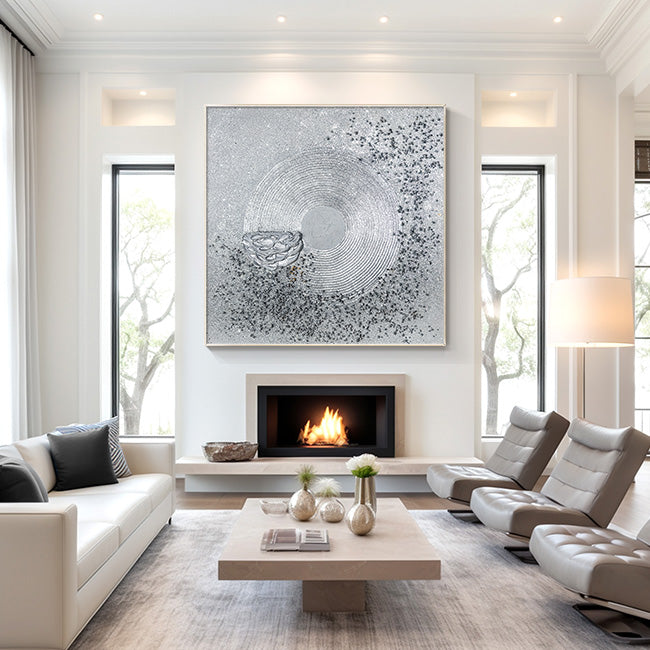
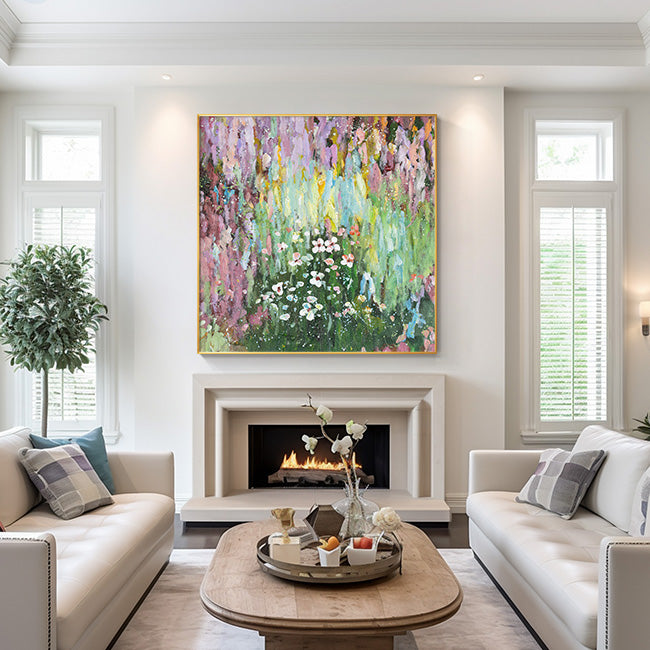

Discover 2026 Wall Art Trends: From Warm Beige to Chocolate Brown Textured Paintings
A beige painting does not have to blend into a beige wall. The most effective neutral rooms usually contain several levels of warmth: ivory fabric, sand-colored plaster, natural wood, and one or two deeper brown accents. Abstract wall art can connect those materials, especially when the canvas has visible texture rather than a completely flat surface.

Build depth with three tones
Start with a light base such as cream or warm beige. Add a middle tone—greige, sand, or caramel—and use chocolate brown sparingly to anchor the arrangement. On a large canvas, a darker shape near the center or edge can give the painting structure without making the whole room feel heavy.
Pay attention to texture
Palette-knife marks and thicker paint catch side light differently from smooth brushwork. In a living room with large windows, those small surface changes can be visible throughout the day. A close-up photograph is especially helpful when buying textured art online, because a room mockup rarely shows the actual relief clearly.
Where warm neutrals work
Above a walnut sideboard, a beige-and-brown painting can connect the wall to the furniture. With an off-white sofa, a darker abstract canvas can provide definition. In a bedroom, choose a gentler range of sand and ivory if you prefer a quieter result. If your room already has dark flooring and furniture, leave enough pale wall visible around the painting.
Choosing size and frame
Use the furniture below the painting as your scale reference. A wide canvas often works above a sofa or dining sideboard, while a tall composition can suit a hallway or the space between windows. Natural wood frames generally reinforce an earthy look; black frames add a sharper edge. Check each product's available size and frame options rather than assuming all paintings share the same proportions.
Frequently asked questions
Will beige wall art disappear on a cream wall?
It can, if the tones are identical. Look for deeper brushwork, brown details, or a frame that defines the edges.
Does chocolate brown work in a small room?
Yes, particularly as an accent in an otherwise light space.
Is textured art suitable for a dining room?
Yes. Consider placement away from frequent splashes and look at close-up images to understand the finish.