Artikel: Where to Hang Wall Art? A Room-by-Room Guide to the Best Wall Art Sizes

Where to Hang Wall Art? A Room-by-Room Guide to the Best Wall Art Sizes
Quick Answer: Where Should You Hang Wall Art?
The best place to hang wall art depends on the furniture underneath it, the wall size, and the room's viewing height.
As a general rule:
- Above a sofa: artwork should be about 60–75% of the sofa's width.
- Above a bed: artwork should be about 66–75% of the bed's width.
- Above a dining table: artwork should be about 60–75% of the table's width.
- Above a console: leave approximately 6–12 inches between the furniture and artwork.
- Center of artwork: approximately 57–60 inches from the floor is a useful starting point when the artwork is not being positioned in relation to furniture.
- Above furniture: the artwork should feel visually connected to the furniture rather than floating high on the wall.
These proportions are consistent with common interior-design guidance, while recent expert advice also emphasizes that artwork should remain visually connected to the furniture beneath it.
The simplest rule to remember:
Choose the artwork according to the furniture, not simply according to the empty wall.
What Is the Best Wall Art Size for a Living Room?
The living room is usually the most important space for wall art because artwork often becomes the room's primary visual focal point.
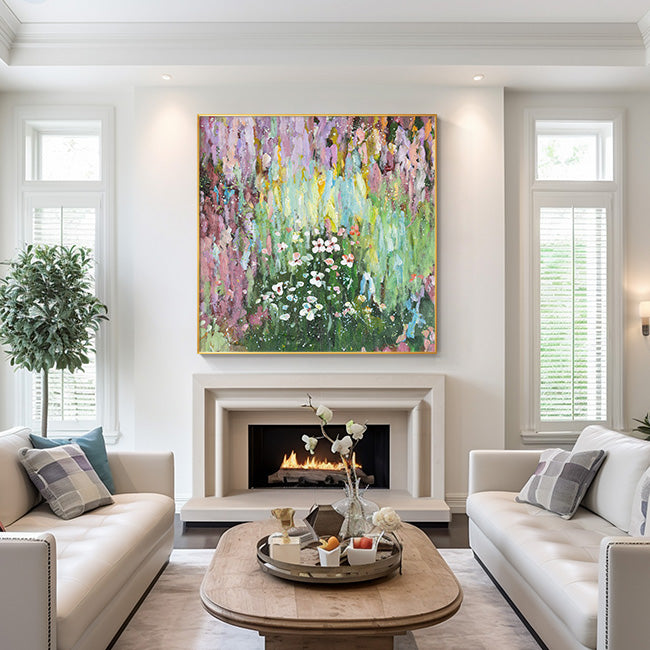
If you are hanging art above a sofa, start with the 60–75% rule.
Living Room Wall Art Size Guide
| Sofa Width | Recommended Artwork Width |
|---|---|
| 60 inches | 36–45 inches |
| 72 inches | 43–54 inches |
| 84 inches | 50–63 inches |
| 90 inches | 54–68 inches |
| 96 inches | 58–72 inches |
| 108 inches | 65–81 inches |
For example, if your sofa is 90 inches wide, a wall artwork approximately 54–68 inches wide will generally create a balanced composition.
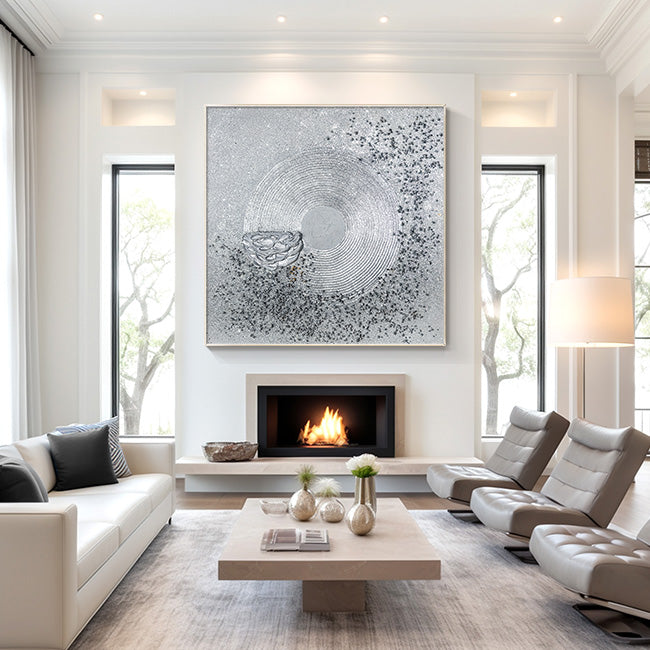
For contemporary interiors, however, oversized artwork can also be used intentionally as a statement piece. Recent design coverage continues to highlight large-scale artwork as an effective way to create visual impact and make a room feel more intentional.

How High Should You Hang Wall Art Above a Sofa?
For artwork above a sofa, avoid placing the painting too close to the ceiling.
A useful starting point is:
6–10 inches between the top of the sofa and the bottom of the artwork.
Some designers allow a wider range of approximately 6–12 inches, depending on the artwork and furniture scale.
The artwork should visually belong to the sofa composition.
Avoid This:
Sofa → huge empty gap → artwork
Aim For This:
Sofa → small intentional gap → artwork
This creates a single visual group rather than two unrelated objects.
Where Should You Hang Abstract Wall Art?
Abstract wall art is one of the most versatile choices for modern interiors because it does not depend on a specific subject or room theme.
It can work above:
- Sofas
- Beds
- Consoles
- Dining tables
- Sideboards
- Entryway furniture
- Office desks
Abstract Wall Art – YMI Painting
The best abstract artwork is not necessarily the most colorful. In 2026, designers are increasingly combining neutral rooms with carefully chosen accents, texture, sculptural surfaces, and personalized statement pieces rather than relying on completely uniform minimalism.
Recommended YMI Product: Neutral Textured Abstract Wall Art

This hand-painted neutral abstract artwork is available in a wide range of sizes, making it suitable for both smaller walls and larger statement compositions.
What Size Wall Art Looks Best Above a Bed?
The bed is the main visual anchor in a bedroom, so wall art should relate directly to its width.
A useful guideline is:
Artwork width = approximately 66–75% of bed width.
Example
For a 60-inch queen-size bed:
Recommended artwork width: approximately 40–45 inches
For a 76-inch king-size bed:
Recommended artwork width: approximately 50–57 inches
A horizontal painting, diptych, triptych, or large neutral abstract can work particularly well above a bed.
YMI's bedroom recommendations emphasize neutral textured art, landscapes, seascapes, and nature-inspired artwork for creating calm bedroom environments.
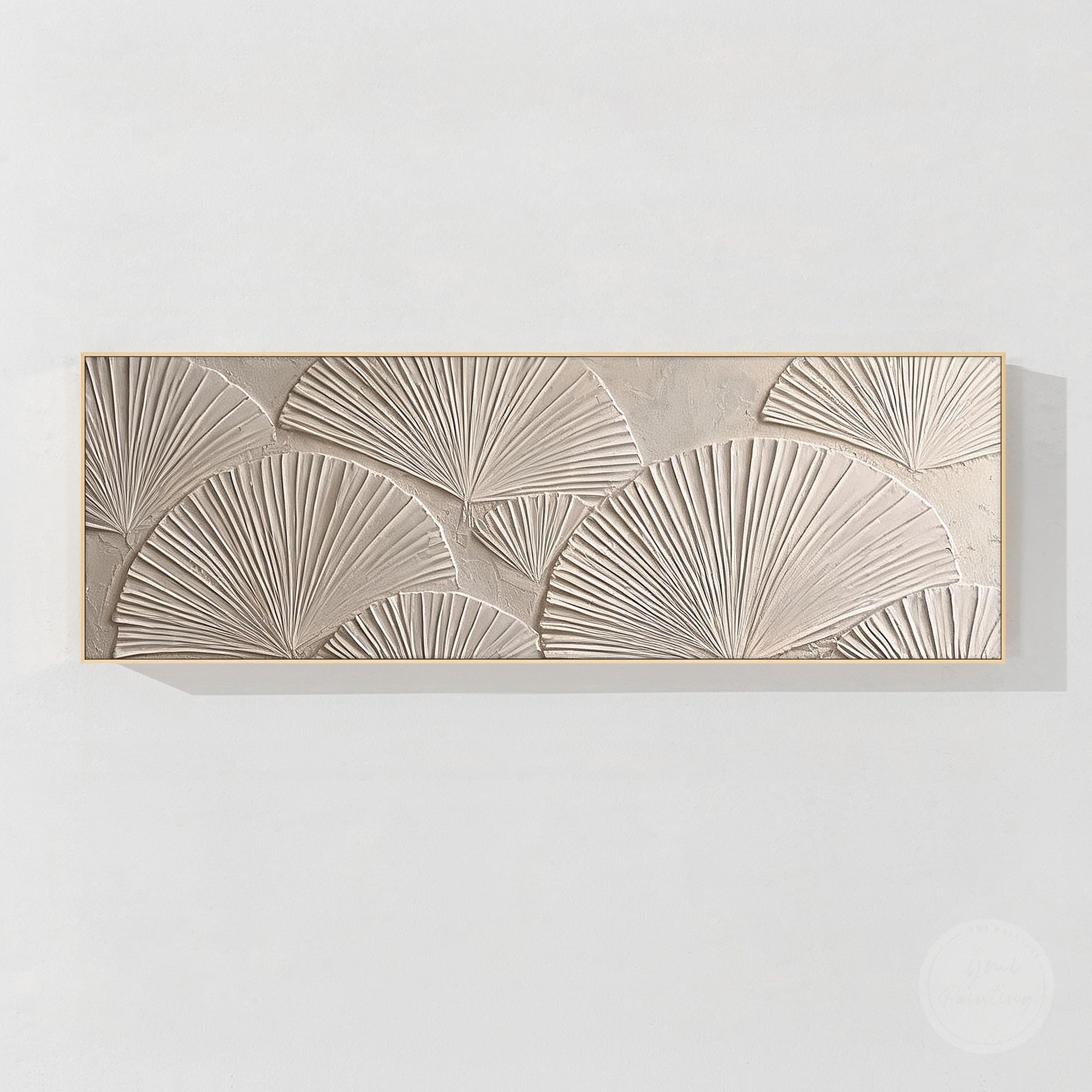
Recommended YMI Product: Warm Beige Textured Abstract Wall Art

Its warm beige palette and textured surface work particularly well with neutral bedding, linen fabrics, wood furniture, and warm contemporary bedrooms.
How High Should Wall Art Be Above a Bed?
When hanging art above a headboard, the artwork should feel connected to the bed.
A practical starting point is:
6–10 inches above the headboard.
If the headboard is unusually tall, adjust the artwork upward slightly to maintain comfortable proportions.
The goal is not to follow a rigid number but to create a unified composition.
What Is the Best Wall Art Size for a Dining Room?
Dining room artwork should relate to the dining table or sideboard beneath it.
A useful guideline is:
Artwork width = approximately 60–75% of dining table width.
Example
For a 72-inch dining table:
Recommended artwork width: approximately 43–54 inches
For a 96-inch dining table:
Recommended artwork width: approximately 58–72 inches
Large abstract paintings, landscapes, textured artwork, and sophisticated neutral pieces work particularly well in dining rooms because they create a focal point without visually competing with the table setting.
Dining Room Art – YMI Painting
Recommended YMI Product: Neutral Textured Abstract Art

The layered neutral surface works well with contemporary dining furniture and natural materials such as wood, stone, linen, and metal.
When Should You Choose Large Wall Art?
Choose large wall art when the wall is large, the furniture is substantial, or the room needs one strong focal point.
Large-scale artwork works particularly well in:
- Open-plan living rooms
- Large sofa walls
- High-ceiling rooms
- Dining rooms
- Hotel-inspired bedrooms
- Entryways
- Modern offices
Large artwork can also make a smaller room feel more intentional when the composition is simple. Recent design advice continues to highlight large-scale artwork as a way to draw the eye upward and emphasize vertical space.
Recommended YMI Product: Oversized 3D Textured Abstract Art

This artwork is offered in very large dimensions, including sizes suitable for oversized feature walls. Its beige-and-white textured composition is particularly compatible with warm minimalist and contemporary interiors.
How Do You Choose Wall Art for a Large Empty Wall?
A large blank wall gives you three main options:
Option 1: One Oversized Painting
Best for:
- Minimalist interiors
- Luxury interiors
- Large modern rooms
- Strong focal points
Option 2: Two or Three Coordinating Pieces
Best for:
- Long walls
- Sofas
- Beds
- Dining rooms
Option 3: Gallery Wall
Best for:
- Eclectic interiors
- Transitional homes
- Personal collections
- Hallways and staircases
For modern interiors, a single oversized artwork often creates a cleaner visual statement than many unrelated small pieces. However, current design trends are also showing more interest in intentional, unconventional art placement, so a smaller artwork can work when it is deliberately integrated into the architecture or surrounding decor.
What Are the Most Popular Wall Art Styles for 2026?
Current interior design coverage points toward a warmer and more personalized interpretation of modern interiors.
Instead of completely sterile minimalism, designers are increasingly combining:
- Natural materials
- Rich textures
- Sculptural surfaces
- Warm neutrals
- Personalized artwork
- Carefully selected accent colors
Recent 2026 trend reporting from ELLE Decor highlights richer materials, tactile contrast, reflective surfaces, and a move toward more individualized interiors.
YMI Painting's own 2026 featured collection similarly emphasizes textured ocean art, minimalist living-room artwork, landscapes, and warmer natural compositions.
Common Wall Art Hanging Mistakes
Mistake 1: Hanging Art Too High
The most common mistake is leaving too much space between furniture and artwork.
Solution: Start with approximately 6–10 inches above the furniture.
Mistake 2: Choosing Artwork That Is Too Small
A large sofa wall with a tiny painting can make the artwork feel disconnected.
Solution: Use the 60–75% furniture-width guideline.
Mistake 3: Ignoring the Room's Architecture
Tall walls may require vertical artwork. Long walls may benefit from horizontal compositions or multiple coordinated pieces.
Mistake 4: Matching Everything Too Closely
Artwork does not need to exactly match the sofa or curtains.
Instead, look for relationships in:
- Color
- Texture
- Shape
- Contrast
- Material
Mistake 5: Filling Every Empty Space
Not every blank wall needs artwork.
Negative space can make the artwork you choose feel more important.
FAQ: Wall Art Size and Placement
What is the best wall art size for a sofa?
A good starting point is artwork approximately 60–75% of the sofa's width.
How high should wall art be from the floor?
When artwork is not positioned above furniture, approximately 57–60 inches from the floor to the center of the artwork is a useful starting point.
How big should wall art be above a bed?
Aim for approximately 66–75% of the bed's width.
Should wall art be centered over furniture?
Generally, yes. Centering artwork with the sofa, bed, dining table, or console creates a stronger visual relationship.
Is one large painting better than several small paintings?
For modern interiors, one large painting often creates a stronger focal point and a cleaner composition. However, a gallery wall or coordinated set can be better for long walls or more eclectic spaces.
Final Answer: What Is the Best Way to Hang Wall Art?
The best wall art placement is not based on one universal measurement. The right size and position depend on the furniture, wall dimensions, room function, and visual style.
If you want a simple formula, remember:
Sofa → 60–75% of sofa width
Bed → 66–75% of bed width
Dining table → 60–75% of table width
Above furniture → approximately 6–10 inches of space
No furniture → artwork center around 57–60 inches from the floor
For a modern 2026 home, prioritize scale, texture, proportion, and intentional negative space rather than simply filling an empty wall.
And when in doubt:
Choose artwork that feels connected to the furniture and architecture around it.