Article: 2026 Mid-Century Modern Art: 4 Styles for Modern Homes

2026 Mid-Century Modern Art: 4 Styles for Modern Homes
Quick Answer: What Art Works Best for Mid-Century Modern Interiors?
The best Mid-Century Modern wall art combines four visual characteristics: warm earthy colors, organic green tones, geometric shapes and abstract compositions.
For a classic Mid-Century Modern interior, look for:
- Burnt orange, terracotta and warm brown for warmth
- Olive, moss and muted green for an organic connection
- Geometric shapes and structured compositions for visual order
- Abstract forms and simplified imagery for a modern artistic feel
These elements complement the defining characteristics of Mid-Century Modern design, which developed around the middle of the 20th century and emphasized clean lines, organic forms, modern materials and functional design. Cooper Hewitt, Smithsonian Design Museum describes the period's interiors as being associated with clean lines, organic forms and open floor plans, while the Smithsonian's design collections document the importance of furniture, graphics, textiles and interiors across the movement.
For homeowners choosing Mid-Century Modern art for a contemporary home, the goal is not to make every element look vintage. Instead, use the visual vocabulary of the period—warm color, geometry, organic shapes and abstraction—while keeping the overall room clean and current.
What Is Mid-Century Modern Design?
Mid-Century Modern is a design movement associated broadly with the middle decades of the 20th century, particularly the postwar period.
The style appeared across furniture, architecture, interiors, textiles, graphics and industrial design. The Smithsonian's Mid-Century Modern Complete describes the period through furniture, lighting, glass, ceramics, textiles, product design, graphics, houses and interiors, reflecting the breadth of the movement.
Cooper Hewitt, Smithsonian Design Museum notes that postwar modern design was characterized by clean lines, organic forms and open-plan spaces, while new manufacturing techniques and materials expanded the possibilities for furniture and household products.
This history explains why Mid-Century Modern wall art often looks different from traditional decorative painting.
Instead of elaborate ornamentation, the style tends to favor:
- Simplified forms
- Geometric patterns
- Organic curves
- Abstract compositions
- Strong but controlled color
- Negative space
- Visual balance
- Functional simplicity
These principles can be translated easily into contemporary wall art.
1. Burnt Orange and Warm Brown Mid-Century Modern Art
Why Orange and Brown Work in Mid-Century Interiors
Burnt orange and warm brown are two of the most recognizable color directions associated with Mid-Century Modern-inspired interiors.
Terracotta, rust, ochre, caramel, walnut and earthy brown can introduce warmth without making a modern room feel overly decorative.
The important distinction is that Mid-Century Modern color is often used as an intentional accent rather than covering every surface. A warm orange abstract painting can provide the color focus while the rest of the room remains relatively restrained.
This approach also connects naturally with Mid-Century furniture materials such as walnut, teak, leather and brass.
YmiPainting Recommendation: Terra Cotta Abstract Wall Art

This YmiPainting artwork combines orange, terracotta, white and brown in an abstract composition. The warm palette makes it particularly suitable for a Mid-Century Modern living room, dining area or entryway where walnut furniture and neutral upholstery need a stronger color accent. YmiPainting offers multiple sizes and frame options for this design.
How to Style Orange Mid-Century Wall Art
Pair burnt orange artwork with:
- Walnut or teak furniture
- Cream sofas
- Cognac leather chairs
- Brass lighting
- Beige rugs
- Warm white walls
- Black metal details
The artwork becomes the color bridge between the furniture and smaller accessories.
A Simple Color Formula
For a contemporary Mid-Century Modern room, try:
60% warm neutral + 30% wood/earth tones + 10% burnt orange
This keeps the orange visually intentional instead of overwhelming the room.
2. Olive Green Wall Art for Mid-Century Modern Homes
Why Olive Green Fits the Style
Olive green adds an organic layer to Mid-Century Modern interiors.
Unlike highly saturated emerald or bright green, olive and muted green can sit comfortably beside walnut, teak, cream, beige, brown and black.
The connection between Mid-Century Modern design and nature is also well documented. Cooper Hewitt's discussion of midcentury wallpaper shows how designers used simplified abstract patterns, muted colors and geometric forms in postwar interiors.
Olive green works particularly well when the room already contains natural wood.
YmiPainting Recommendation: Earthy Green Abstract Wall Art

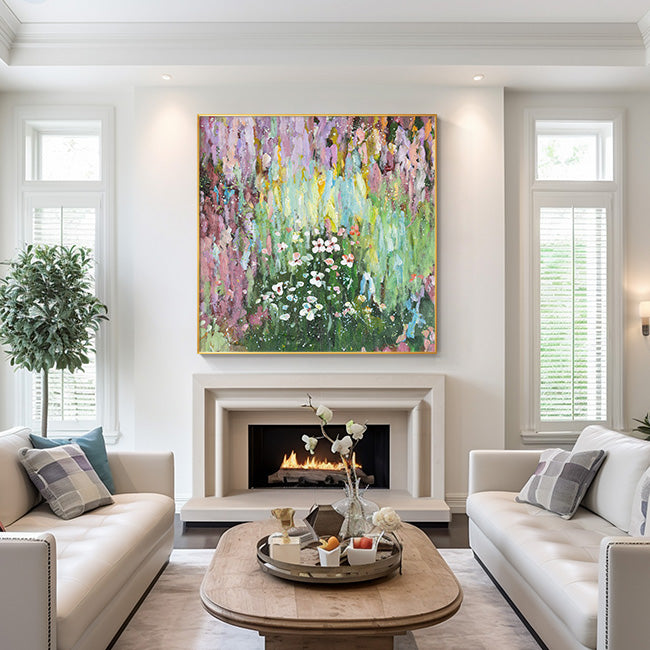
This hand-painted abstract artwork uses earthy green, white and gold tones with bold brushwork and a simplified landscape-inspired composition. The restrained green palette can work as a bridge between Mid-Century Modern furniture and contemporary organic interiors. YmiPainting lists the piece as made-to-order and allows customization of size, color and frame.
How to Style Olive Green Wall Art
Olive green wall art pairs naturally with:
- Walnut credenzas
- Teak sideboards
- Cream boucle chairs
- Beige sofas
- Black metal frames
- Brass lamps
- Natural fiber rugs
For a more contemporary interpretation, keep the surrounding walls neutral and let the green painting provide the organic color accent.
3. Geometric Wall Art: The Graphic Language of Mid-Century Modern
Why Geometric Art Is Important
Geometric wall art is one of the clearest ways to connect artwork with Mid-Century Modern furniture and interiors.
Look at classic Mid-Century furniture and architecture and you will often find circles, rectangles, tapered forms, grids, arcs and repeated proportions.
Cooper Hewitt's research on Alexander Girard specifically documents his use of bold geometric patterns and strong color within modernist design.
Cooper Hewitt's collection also documents 1950s abstract wallpapers using lines, circles, angular forms and overlapping geometry, demonstrating how geometric and abstract pattern became part of midcentury interiors.
YmiPainting Recommendation: Neutral Geometric Abstract Art

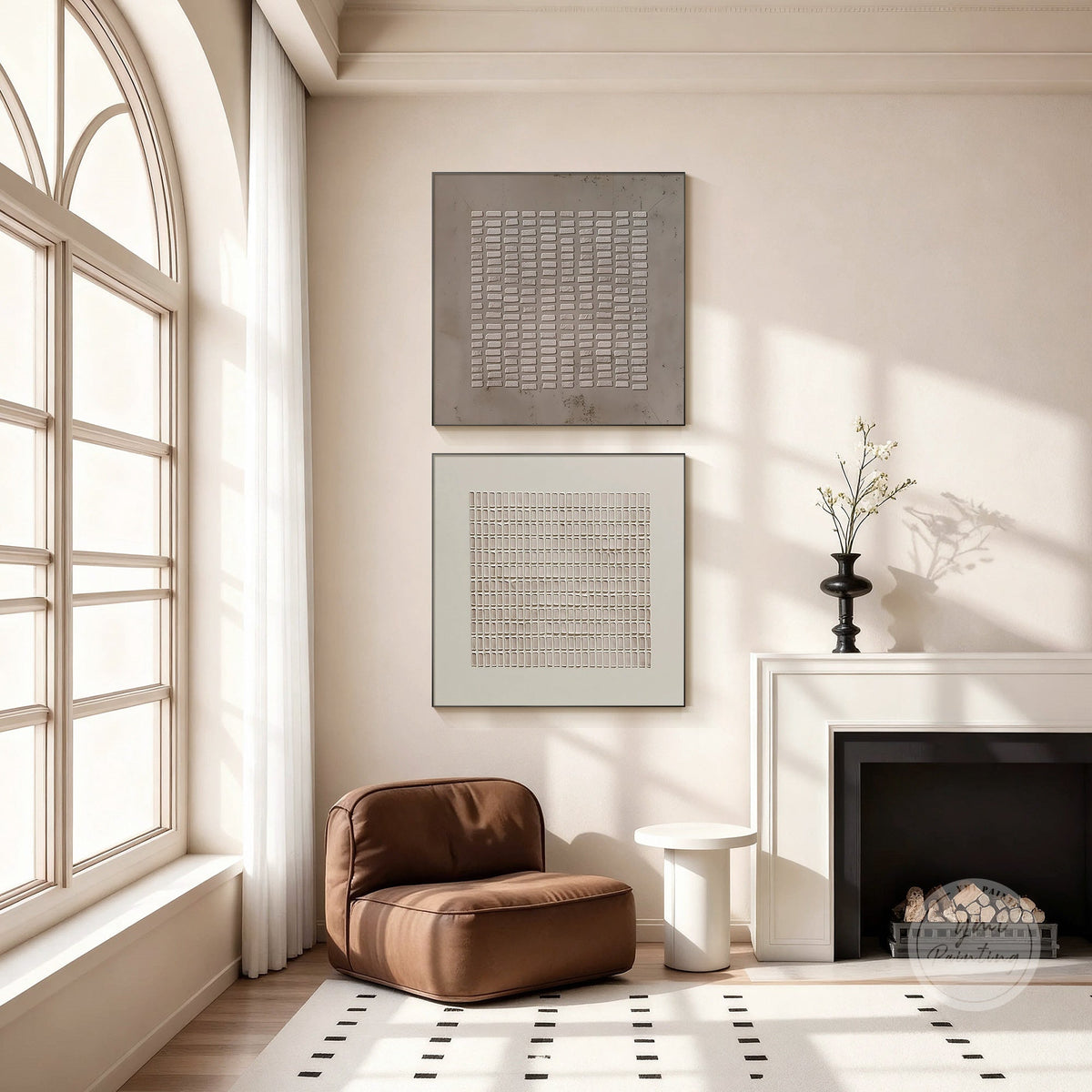
This YmiPainting composition uses beige, cream, brown and black geometric forms, making it particularly compatible with the earthy palette of Mid-Century Modern interiors. The composition combines geometric shapes with negative space, giving the artwork a graphic quality without relying on overly bright colors.
YmiPainting Recommendation: Beige and Brown Geometric Wall Art

This artwork features curved beige forms against a dark brown background, creating a strong relationship between organic curves and geometric structure. Its neutral earth-tone palette can work particularly well with walnut furniture and warm neutral interiors.
How to Use Geometric Art Without Making the Room Look Busy
A common mistake is combining too many geometric patterns.
If the rug already has a strong geometric pattern, choose a simpler painting.
If the furniture is visually restrained, a more graphic painting can become the focal point.
A useful approach is:
One statement geometric artwork + simple furniture + generous negative space.
This preserves the visual clarity associated with modernist interiors.
4. Abstract Art for a Modern Mid-Century Interior
Why Abstract Art Works So Well
Abstract art allows you to capture the spirit of Mid-Century Modern design without reproducing a historical pattern literally.
Midcentury interiors frequently incorporated abstract and non-representational patterns. Cooper Hewitt's research on 1950s wallpaper notes that consumers increasingly turned toward geometry, modernist design and abstract art rather than more traditional representational patterns.
The result is a useful principle for modern homes:
Choose artwork inspired by Mid-Century Modern design rather than artwork that simply looks retro.
YmiPainting Recommendation: Neutral Textured Abstract Art

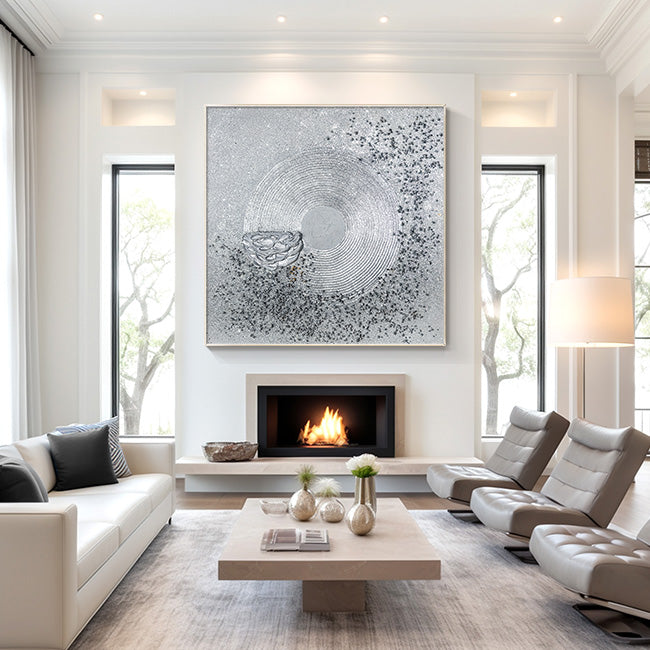
YmiPainting's YMP627 combines warm beige, cream layered texture with organic abstract forms. The neutral palette makes it easier to integrate into a Mid-Century room where the furniture already provides the historical reference.
YmiPainting Recommendation: Beige and Brown Abstract Diptych

This two-piece abstract composition uses beige and brown tones with geometric and abstract elements. A diptych can be particularly useful above a long credenza, sofa or dining area because the paired format creates horizontal rhythm without requiring a large gallery wall.
5. Four Mid-Century Modern Art Styles to Know
If you want to choose artwork quickly, use these four categories.
1. Burnt Orange and Warm Brown
Look for: terracotta, rust, burnt orange, ochre, caramel and walnut brown.
Best with: walnut furniture, leather, brass and cream upholstery.
Recommended YmiPainting artwork: Terra Cotta Abstract Wall Art #YMA095.
This palette introduces warmth and creates a recognizable Mid-Century Modern color reference.
2. Olive Green
Look for: olive, moss, muted green and earthy green.
Best with: teak, walnut, beige, cream and natural materials.
Recommended YmiPainting artwork: Green Abstract Art #CA0687.
Its earthy green palette and abstract landscape-inspired composition provide a softer interpretation of the style.
3. Geometric Art
Look for: circles, arcs, rectangles, blocks, lines, grids and simplified organic shapes.
Best with: clean-lined furniture and open wall space.
Recommended YmiPainting artworks: YMP568 and YMP672.
Both use geometric structures and restrained earth tones that can connect artwork with Mid-Century furniture forms.
4. Abstract Art
Look for: simplified forms, asymmetry, negative space, organic shapes and restrained color blocking.
Best with: contemporary Mid-Century interiors where you want the room to feel current rather than historically themed.
Recommended YmiPainting artworks: YMP625 and YMA0545.
Their neutral palettes allow the furniture and architecture to remain important parts of the overall composition.
6. How to Choose Mid-Century Modern Wall Art by Room
Mid-Century Modern Living Room
The living room usually offers the largest wall area, making it a good place for a statement painting.
For a walnut credenza or sofa wall, consider:
- Large geometric abstract art
- Burnt orange abstract paintings
- Olive green landscapes
- Neutral geometric compositions
A horizontal painting can visually reinforce a long sofa or credenza, while a large square canvas can work above a compact seating arrangement.
Mid-Century Modern Bedroom
Bedroom artwork generally benefits from lower visual intensity.
Choose:
- Olive green
- Warm brown
- Beige
- Muted orange
- Soft abstract forms
Avoid filling the entire wall with multiple unrelated pieces. One large abstract painting above the bed can create a stronger visual anchor while preserving the clean character of the room.
Mid-Century Modern Dining Room
The dining room is an excellent location for geometric artwork.
A geometric composition can echo the shapes of:
- Dining tables
- Pendant lights
- Sideboards
- Dining chairs
- Architectural lines
For a warm dining room, combine a brown or terracotta artwork with walnut furniture and warm lighting.
Mid-Century Modern Entryway
A smaller vertical or square artwork can work well in an entryway.
Because entryways often have less furniture, a single geometric or abstract canvas can create a clear focal point.
Try combining:
one painting + one wood console + one sculptural lamp + open wall space.
This keeps the entryway visually organized.
7. How to Make Mid-Century Modern Art Feel Contemporary in 2026
A common concern is that Mid-Century Modern decor can look too retro.
The solution is to combine period-inspired visual elements with contemporary materials and proportions.
Instead of recreating a complete 1950s room, select two or three recognizable Mid-Century elements.
For example:
Walnut credenza + geometric abstract painting + contemporary sofa
or:
Cream sofa + olive green artwork + sculptural lighting
or:
Teak furniture + terracotta abstract painting + neutral rug
This approach preserves the design language while keeping the room current.
The historical foundation is important here. MoMA's documentation of Charles and Ray Eames shows how Mid-Century Modern design combined modern manufacturing, practical function and visually distinctive forms.
The objective is therefore not to reproduce a historical room exactly, but to carry forward its principles of clarity, function, material awareness and visual simplicity.
. Hand-Painted Art and Mid-Century Modern Interiors
Mid-Century Modern design was closely connected with industrial production, but contemporary interpretations do not have to rely exclusively on mass-produced decoration.
Hand-painted canvas introduces another layer: surface variation and individual craftsmanship.
This can be especially useful when the room already contains smooth wood, glass or metal surfaces.
A textured or hand-painted artwork can create contrast against:
- Polished wood
- Glass tables
- Metal lighting
- Leather seating
- Smooth plaster walls
YmiPainting states that its artworks are hand-painted and made to order, with customization available for size, orientation, color and framing on relevant product pages.
This gives homeowners another way to adapt a Mid-Century Modern painting to the proportions and palette of a specific room.
9. The 8 YmiPainting Artworks for a Mid-Century Modern Home
For a quick reference, these eight YmiPainting pieces cover the four main visual directions discussed in this guide:
| Style | Artwork | Key Visual Elements |
|---|---|---|
| Orange & Brown | Terra Cotta Abstract #YMA095 | Terracotta, orange, white, brown |
| Olive / Green | Green Abstract #CA0687 | Earthy green, white, gold |
| Geometric | Abstract Geometric #YMP568 | Beige, brown, cream, black |
| Geometric | Abstract Geometric #YMP672 | Beige, dark brown, organic geometry |
| Abstract | Neutral Abstract #YMP625 | Beige, cream, brown, texture |
| Abstract | Abstract Diptych #YMA0545 | Beige, brown, geometric abstraction |
| Orange / Texture | 3D Orange Abstract #CA0666 | Orange, dimensional texture |
| Green / Natural Texture | Capiz Wall Art #YSH03 | Sage green, olive, gold, organic texture |
The additional 3D Orange Abstract #CA0666 can be used when a room needs a stronger orange focal point; YmiPainting describes its surface as a dimensional, feather-like orange texture.
For a more organic interpretation, Capiz Wall Art #YSH03 combines sage green, soft olive tones and gold with natural shell texture. It is less strictly geometric than the other recommendations, but it can work as a contemporary natural-material interpretation of the Mid-Century palette.
10. Mid-Century Modern Wall Art: A Simple Buying Guide
When choosing artwork for a Mid-Century Modern home, ask four questions:
Does the color connect with the furniture?
Warm orange and brown work naturally with walnut, teak and leather. Olive green can connect wood furniture with plants and other natural elements.
Does the composition have clear structure?
Look for geometry, simplified forms, balanced asymmetry or intentional negative space.
Does the artwork add something different from the furniture?
If your furniture is highly geometric, an organic abstract painting can soften the room.
If the furniture is simple and neutral, geometric artwork can add structure.
Is the artwork contemporary enough for the room?
Rather than recreating a period room, combine Mid-Century references with contemporary materials, lighting and furniture.
Final Takeaway: Four Ways to Choose Mid-Century Modern Art
The easiest way to choose Mid-Century Modern wall art in 2026 is to focus on four visual categories:
1. Burnt orange and warm brown — add warmth and connect with walnut, teak and leather.
2. Olive green — introduce an organic, nature-inspired color layer.
3. Geometric art — reinforce the clean lines and graphic structure associated with modernist interiors.
4. Abstract art — create a contemporary interpretation of Mid-Century design without making the room look like a historical reproduction.
The strongest combinations usually come from choosing one dominant visual idea and allowing the surrounding furniture and architecture to provide the rest.
A burnt orange abstract painting can become the focal point above a walnut credenza. An olive green artwork can soften a neutral bedroom. A geometric canvas can reinforce the architecture of a dining room. A neutral abstract painting can connect wood, leather, brass and contemporary furniture into one cohesive composition.
Mid-Century Modern design has a documented history across furniture, architecture, textiles, graphics and interiors, but its principles remain adaptable.
For today's homes, the style can be interpreted through warm color, clean geometry, organic forms and expressive abstraction—four characteristics that make Mid-Century Modern wall art easy to integrate into contemporary interiors.
Explore Mid-Century Modern Inspired Wall Art
Explore YmiPainting's collection of hand-painted abstract, geometric and colorful canvas artwork to find pieces that complement walnut furniture, modern living rooms, bedrooms, dining spaces and contemporary interiors.